Finding the Right Custom Apparel Printing Partner for Your Brand
When I started my small clothing line a few years back, I learned pretty quickly that finding a reliable custom apparel printing partner was harder than designing the shirts themselves. Every shop I called had a different minimum order, a different turnaround time, and a different idea of what "rush" meant. Some shops wanted me to commit to hundreds of pieces before they'd even talk to me. Others had samples that looked faded after two washes. It took a lot of trial and error to figure out what actually matters when you're choosing a printer for your custom apparel printing needs.
After working with several print shops in Los Angeles and talking to other small business owners, I've put together a few things to consider before you hand over your artwork and your budget. Whether you're printing for a one-time event or building an ongoing brand, the right partner makes all the difference. The phrase custom apparel printing customtsprinting comes up a lot in local conversations, and for good reason: it points to a specific level of service that smaller shops often need.
Understanding the Different Print Methods
Not all custom apparel printing is the same. The method you choose affects the look, feel, durability, and cost of your final product. Here are the most common options you'll run into:
- Screen printing: Great for large orders with simple designs. The ink sits on top of the fabric, giving a bold, long-lasting result. Setup costs are higher, but per-piece price drops quickly with volume.
- DTF transfers: A newer option that works well for small runs and full-color designs. The design is printed onto a special film and then heat-pressed onto the garment. It's flexible and doesn't require the high minimums of screen printing.
- Embroidery: Best for hats, polos, and jackets. It adds a professional, textured look. Not ideal for very detailed logos or fine text.
- Direct-to-garment (DTG): Like printing with an inkjet printer directly onto the shirt. Good for small orders with lots of colors, but the print may not last as long as screen printing on darker fabrics.
Each method has trade-offs. I once chose DTG for a batch of 50 shirts because the artwork had gradients. They looked great at first, but after a few washes the colors started to fade unevenly. For that same design today, I'd probably go with DTF transfers. Knowing what each method does well helps you avoid that kind of disappointment.
Why In-House Production Matters
One of the biggest frustrations I had early on was dealing with shops that outsourced their printing. I'd place an order, get a tracking number, and then wait while the actual printer worked through their backlog. If something went wrong, the shop I paid could only relay messages. Nobody took ownership.
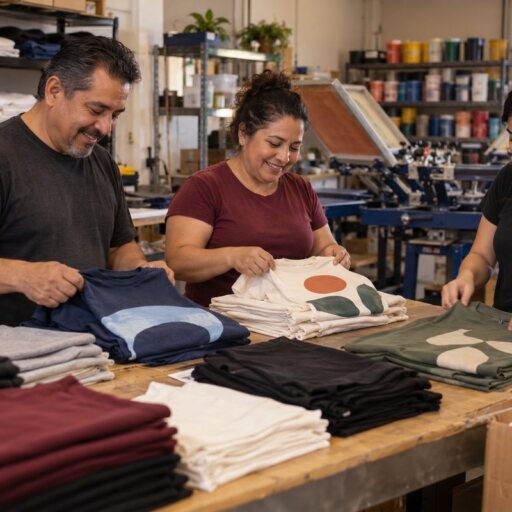
Working with a printer that handles production in-house changes that. You can visit the shop, see the equipment, and talk directly to the people running the presses. If there's a color issue on press, they can show you right there and offer a fix. That kind of transparency builds trust. It also speeds up turnaround because there's no middleman. Custom Shirt Printing operates this way, and it's part of why so many local businesses stick with them once they try it.
When you're looking for custom apparel printing customtsprinting, ask whether the shop does its own work or sends it out. The answer tells you a lot about how much control they have over quality and timing.
The Value of Free Design Help
Not everyone who needs custom shirts is a graphic designer. I've seen plenty of people walk into a print shop with a napkin sketch or a vague idea and walk out with a finished product they love. That only happens when the shop offers real design assistance, not just a file upload form.
Free design help sounds like a small perk, but it can save you hours of frustration. A good designer can take your rough concept and turn it into a print-ready file that works with the chosen method. They know which colors will pop on a black shirt, how to simplify a logo for embroidery, and what font sizes will remain readable after printing. That expertise is worth a lot, especially if you're new to apparel.
Custom Shirt Printing includes that service with every order. I've sent friends there who were nervous about their artwork, and every time they came back happy. It's one of those things that separates a true partner from a transactional order-taker.

Minimum Orders and Budget Realities
Minimum order quantities can be a dealbreaker for small businesses and individual creators. Some screen printing shops won't touch an order under 48 pieces, and that's if you're lucky. If you only need 20 shirts for a team or a launch event, you might be stuck paying full setup costs or being pushed toward a more expensive method.
That's where DTF transfers and DTG printing become useful. They have much lower minimums, sometimes as low as one piece. The per-piece cost is higher, but you're not forced to over-order. I've found it's smart to start small, test your design on a few shirts, and then scale up once you know what sells. The upfront savings from ordering extra inventory you don't need usually end up costing you in storage and markdowns.
When I first started, I ordered 100 shirts because the per-piece price was tempting. I still have a box of those in my garage. Now I order in smaller batches and reorder as needed. That approach works better with a printer that understands flexibility.
Turnaround Time and Communication
In custom apparel printing, the timeline is often the most stressful part. You have a deadline: a trade show, a fundraiser, a team launch. The printer has a production schedule. If those two things don't align, you're in trouble.
The best shops are honest about their capacity. They'll tell you upfront if they can meet your date, and they'll give you a realistic window. I've learned to ask for a production timeline in writing and to build in a buffer of a few days on my end. It's also worth asking how they handle misprints or damaged goods. A good printer will redo those at no charge, but not all offer that.
Clear communication throughout the process matters more than most people realize. You want a shop that answers emails within a few hours and picks up the phone when you call. Custom Shirt Printing has a reputation for that kind of service, and it's why they keep getting referrals from past customers.

Bringing It All Together
Choosing a custom apparel printing partner is a decision that affects your brand's look, your budget, and your stress level. The right partner offers the right method for your job, handles production in-house, provides real design help, works with your order size, and communicates clearly. That's a lot to ask, but shops like those referenced by custom apparel printing customtsprinting prove it's possible.
Whether you're printing your first run or your hundredth, take the time to visit a few shops, ask the right questions, and see samples in person. The extra effort upfront saves you from bad prints, missed deadlines, and boxes of shirts you can't sell. Good custom apparel printing is a partnership, not a transaction, and it's worth finding a partner who treats it that way.
 Facebook
 Instagram